

29 June, 2026
Dry Needling in Dubai: Your 2026 Guide to Faster Pain Relief and Recovery
AI Overview
- Dry needling uses fine, single-use needles inserted into myofascial trigger points to relieve pain and improve range of motion.
- It targets tight muscle knots that refer pain elsewhere in the body, and is grounded in Western anatomy and neurophysiology, not traditional Chinese medicine.
- The technique is backed by clinical research in physiotherapy and sports medicine.
- In the UAE it must be performed only by trained, DHA-licensed physiotherapists.
- At Franklin Chiropractic Dubai, dry needling is delivered by a 20+ year physiotherapy team within a single multidisciplinary practice in Jumeirah Lake Towers, with chiropractic and consultant input available in the same clinic.
At Franklin Chiropractic Dubai, we’ve spent over two decades helping residents across Jumeirah Lake Towers, Marina, and greater Dubai get back to moving without pain, and that longevity matters: the clinics that last in a market as competitive as Dubai’s are the ones that actually deliver results. One of the techniques we use most often, and one that’s been gaining serious traction in the UAE, is dry needling. It’s precise, evidence-based, and often delivers results faster than patients expect, especially when it’s performed by DHA-licensed physiotherapists working inside a full multidisciplinary team rather than as an isolated add-on. Here’s our 2026 guide to what dry needling in Dubai actually involves, who it helps, and why so many patients choose Franklin for it.
What Is Dry Needling and How Does It Work?
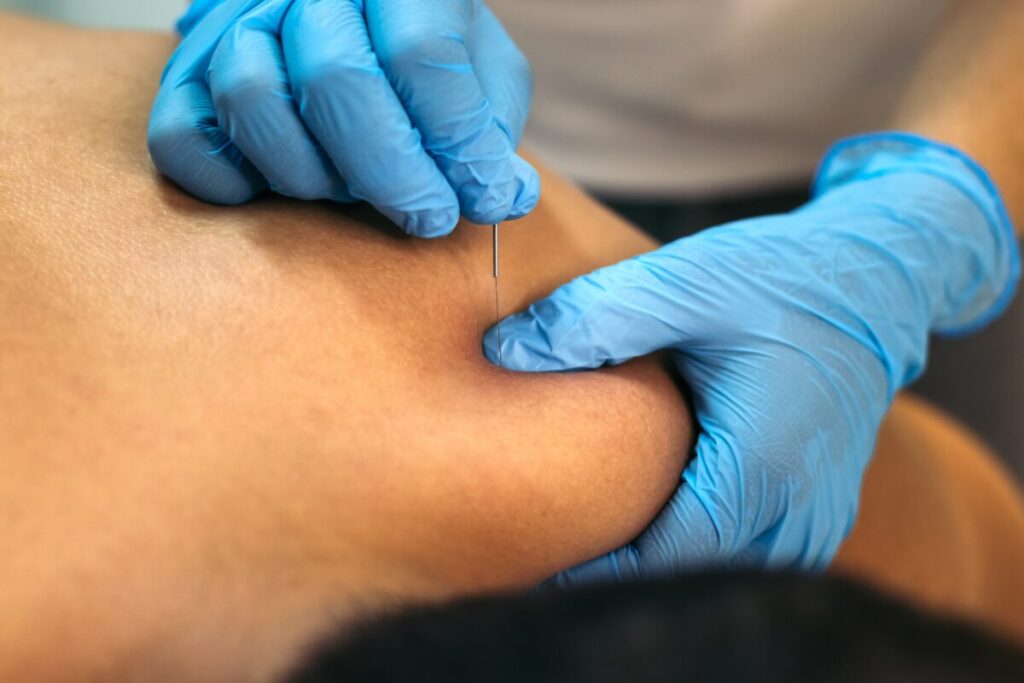
Dry needling is a physiotherapy technique that uses thin, sterile filiform needles inserted into trigger points within tight muscles to relieve pain, improve range of motion, and accelerate healing. It’s grounded in modern Western anatomy and neurophysiology, not traditional Chinese medicine. At Franklin Chiropractic Dubai, our physiotherapists use dry needling as part of a wider treatment plan for musculoskeletal conditions, with chiropractors and consultant input available in the same JLT clinic when a case needs it, something most single-discipline clinics simply can’t offer.
The word “dry” refers to the fact that nothing is injected through the needle, no medication, no fluid. The needle itself does the work by creating a small local twitch response in the muscle, which helps release tension, improve blood flow, and reset the way the nerves communicate with the muscle fibres. The skill is in finding exactly the right point, and that’s where two decades of clinical experience earns its keep.
Dry Needling vs. Acupuncture: Key Differences Explained
People often confuse the two, and it’s understandable; the needles look similar. But the philosophy and application are quite different.
Acupuncture comes from traditional Chinese medicine and works along meridian lines to balance the body’s energy, or qi. Sessions tend to be longer, with needles left in place for 20 to 40 minutes.
Dry needling is a Western medical technique. It targets specific neuromuscular dysfunctions identified through palpation and orthopaedic assessment. Needles are typically inserted, manipulated briefly, and removed, sometimes within seconds.
| Feature | Dry Needling | Acupuncture |
|---|---|---|
| Origin | Western physiotherapy | Traditional Chinese medicine |
| Target | Myofascial trigger points | Meridian/energy points |
| Session length | 10-20 minutes | 30-45 minutes |
| Practitioner | Licensed physiotherapist | Licensed acupuncturist |
| Diagnosis basis | Anatomical and clinical | Whole-body energy assessment |
Both can be effective, but they’re answering different questions about your body. It’s worth noting that the quality of dry needling depends heavily on the accuracy of that anatomical assessment, which is why we have it done by experienced, Master’s-qualified physiotherapists rather than a generalist running through a routine.

Common Conditions Treated With Needle Therapy
Needle therapy isn’t a one-trick treatment. Over the years, we’ve used it successfully for a wide range of issues that walk through our doors in JLT. Many of these cases come to us after desk-bound work, which is a pattern our physiotherapist Donnabelle Gabio sees daily given Dubai’s long-hours office lifestyle, and she’s built a particular skill set around treating exactly this kind of neck and lower back pain.
Conditions our team commonly treats with dry needling include:
- Chronic neck and shoulder pain, especially from prolonged desk work
- Lower back pain and lumbar muscle spasms
- Tension headaches and cervicogenic headaches
- Tennis elbow and golfer’s elbow
- Plantar fasciitis and calf tightness
- Sciatic-type referred pain from piriformis or glute trigger points
- Sports injuries like hamstring strains or rotator cuff dysfunction
- TMJ-related jaw tension
- Post-surgical scar tissue and adhesions
A big reason patients pick us for these conditions is that we don’t treat them in isolation. If your sciatic pain turns out to be a disc issue, or your shoulder problem has a structural root, the right specialist is already down the hall.
Expert Tip: Dry needling works best when paired with corrective exercise, manual therapy, and sometimes chiropractic adjustments. Treating the trigger point matters, but so does fixing the underlying movement pattern that created it in the first place. At Franklin, your physiotherapist can bring in one of our chiropractors, Dr Madelaine Franklin, Dr Marius Coetzee, Dr Kirsten Petrie, or Dr Vanda Corbett, the same day when the root cause is structural rather than just muscular, so you’re not left chasing referrals across the city.
The Science Behind Dry Needling Physiotherapy
So what actually happens when a needle goes into a tight knot? A few things, all at once.
First, there’s a mechanical effect. The needle disrupts the contracted muscle fibres in a trigger point, prompting what’s called a local twitch response. This brief, involuntary contraction has been shown in studies to reduce spontaneous electrical activity in the muscle, basically calming it down.
Second, there’s a neurochemical effect. Research published in journals like the Journal of Orthopaedic & Sports Physical Therapy indicates dry needling increases local blood flow, reduces inflammatory markers, and modulates pain signalling at both the spinal cord and brain level.
Third, there’s the central nervous system response. Patients often report a kind of “reset” feeling in the area, which aligns with research showing changes in how the brain processes pain after treatment. This is exactly the kind of evidence our physiotherapists stay on top of, Chloé Hoeben, for instance, actively follows the latest pain management and neuroscience research, which means the technique you receive at Franklin reflects current best practice, not whatever was taught a decade ago.
Industry Insight: A 2024 systematic review in Physical Therapy in Sport concluded that dry needling combined with exercise produced significantly better outcomes for chronic musculoskeletal pain than exercise alone. This is precisely why we never offer needling in isolation, and why a clinic that does should give you pause.
What to Expect During Your First Dry Needling Session in Dubai
Walking into your first session can feel a bit nerve-wracking, especially if you’re not big on needles. Here’s how we typically run things at our JLT clinic, and what makes the Franklin experience different from a quick in-and-out appointment.
Step 1: Assessment
Before any needle comes out, we do a thorough musculoskeletal exam. This means range of motion testing, palpation, posture analysis, and a conversation about your history and goals. We don’t skip straight to the needles the way busier, less careful clinics often do.
Step 2: Treatment Plan
Your physiotherapist explains where the trigger points are, why they matter, and how many needles they’ll use. Consent is reviewed.
Step 3: Needle Insertion
You’ll lie down comfortably. The skin is cleaned, and thin needles, much finer than the ones used for injections, are inserted into the target points. You may feel a small prick, then a dull ache or twitch. That’s the response we’re looking for.
Step 4: Post-Treatment Care
We often follow up with stretching, mobilisation, or specific strengthening exercises, because the session shouldn’t end the moment the needles come out. Soreness for 24 to 48 hours afterward is normal and usually mild.
Benefits of Choosing Dry Needling for Pain Management
Why pick dry needling over, say, just more massage or another round of anti-inflammatories? A few reasons stand out for the patients we see.
- Faster results for trigger-point pain. Many patients report meaningful relief within one to three sessions.
- Drug-free. No reliance on painkillers or steroid injections.
- Targets the source, not just symptoms. Treating the actual neuromuscular dysfunction rather than masking it.
- Complements other care. Pairs well with chiropractic adjustments, physiotherapy exercises, and sports rehab, all of which are available under one roof at Franklin, so your whole plan is coordinated by one team.
- Improves mobility. Patients often notice better range of motion immediately after the needles come out.
- Supports performance. Athletes use it to recover faster between training sessions.
It’s not a miracle fix, and we’d never sell it as one. But for the right patient with the right condition, it can shorten the recovery curve significantly. That honesty about what dry needling can and can’t do is part of what brings patients back to us, and what keeps them recommending us to friends and colleagues across Dubai.
Potential Side Effects and Safety Considerations
Dry needling is generally safe when performed by a properly trained physiotherapist. That said, there are some things worth knowing.
Common, mild side effects include:
- Temporary soreness at the needle site
- Light bruising
- Brief fatigue or drowsiness after a session
- A small amount of bleeding when the needle is removed
Rare but more serious risks, almost always linked to untrained practitioners, include pneumothorax (when needling near the chest wall) and nerve irritation. This is exactly why DHA licensing and proper certification matter so much, and why every physiotherapist at Franklin is individually DHA-licensed under our practice license No. 0002437. When you book with us, you’re not gambling on who picks up the needle.
Who should avoid or delay dry needling? Patients on blood thinners, those with certain bleeding disorders, pregnant women in the first trimester, and anyone with a severe needle phobia or active local infection should discuss alternatives with their physiotherapist first. We always go through a full screening before treatment, no exceptions, and we’ll tell you honestly if you’re not a good candidate.
How to Choose a Qualified Dry Needling Physiotherapist in Dubai
Not every clinic offering dry needling in Dubai holds the same standard. Here’s what we recommend looking for, and on every one of these points, Franklin is built to meet the bar.
- DHA license. Verify your physiotherapist is licensed by the Dubai Health Authority. This is non-negotiable. Every Franklin physiotherapist is licensed and verifiable, and our license number is published openly on our site.
- Specific dry needling certification. General physio training isn’t enough. Look for postgraduate certification from recognised bodies. Both Chloé Hoeben and Donnabelle Gabio list dry needling among their trained techniques.
- Years of clinical experience. Trigger-point palpation is a skill that develops over time. Our physiotherapists at Franklin Chiropractic Dubai bring over 20 years of experience from orthopaedic hospitals worldwide, including senior hospital roles in Cape Town, London, and the Philippines, the kind of depth you can’t fake.
- Multidisciplinary setting. A clinic that combines chiropractic, physiotherapy, and access to consultant neurosurgeons can manage complex cases better than a single-discipline practice. This integrated model is the core of how Franklin works, and the single biggest reason patients who plateaued elsewhere finally improve with us.
- Transparent communication. A good practitioner explains what they’re doing, why, and what to expect, no jargon walls. Plain-language explanation is something our patients consistently note in their reviews.
Expert Tip: Ask how dry needling fits into your overall plan. If a clinic offers it as a standalone fix without addressing posture, strength, or movement, that’s a red flag. We build needling into a wider rehab plan every time, never as a one-off.
Cost of Dry Needling Treatment in Dubai and Insurance Coverage
Pricing for dry needling in Dubai typically ranges from AED 300 to AED 600 per session, depending on the clinic, the practitioner’s experience, and whether it’s bundled with a full physiotherapy assessment.
Most reputable clinics, including ours, include dry needling as part of a broader physiotherapy session rather than charging separately for every needle inserted, so you’re paying for a complete treatment, not a tally of needles.
Insurance coverage varies widely. Many major UAE insurers, Daman, AXA, Cigna, Bupa Global, Allianz, and others, cover physiotherapy sessions that include dry needling when prescribed for a medically necessary condition. We offer direct billing with major UAE insurers, and our practice assistant can confirm your coverage before your first visit so there are no surprises. We always recommend:
- Checking your annual physiotherapy session limit
- Confirming whether a referral is required
- Asking about co-pay percentages upfront
Our Approach vs. Traditional Alternatives
| Approach | Time to Relief | Drug-Free | Treats Root Cause | Long-Term Results |
|---|---|---|---|---|
| Franklin Chiropractic Dubai (multidisciplinary) | 1-3 sessions | Yes | Yes | Strong |
| Painkillers only | Hours | No | No | Weak |
| Massage only | Days to weeks | Yes | Partial | Moderate |
| Steroid injection | 1-7 days | No | No | Variable |
The pattern is clear: the alternatives either mask the problem or treat only part of it. Franklin’s multidisciplinary approach is the one column built to fix the root cause and keep it fixed.
Conclusion
Pain that lingers isn’t something you should just learn to live with. Dry needling, when done by experienced hands and paired with the right rehabilitation plan, can be a genuine turning point for chronic muscular and joint issues. At Franklin, those experienced hands belong to DHA-licensed physiotherapists with 20+ years behind them, backed by a chiropractic and rehab team in the same building, all in the heart of JLT. That combination of credentials, experience, and true multidisciplinary care under one roof is what separates a real recovery plan from a quick fix, and it’s why patients across Dubai choose us.
Frequently Asked Questions About Dry Needling in Dubai
What is dry needling in Dubai and how does it work?
Dry needling is a Western physiotherapy technique using thin, sterile needles inserted into trigger points within tight muscles to relieve pain and improve mobility. The needle creates a local twitch response that releases tension, improves blood flow, and resets nerve-muscle communication without injecting any medication. At Franklin Chiropractic Dubai, it’s performed by DHA-licensed physiotherapists as part of a wider treatment plan.
What’s the difference between dry needling and acupuncture?
Dry needling is a Western medical technique targeting myofascial trigger points identified through anatomical assessment, with sessions lasting 10-20 minutes. Acupuncture stems from traditional Chinese medicine, working along meridian lines to balance energy, with sessions lasting 30-45 minutes. Both are effective but use different approaches.
What conditions can dry needling treat in Dubai?
Dry needling effectively treats chronic neck and shoulder pain, lower back pain, tension headaches, tennis elbow, plantar fasciitis, sciatic-type pain, sports injuries, TMJ-related jaw tension, and post-surgical scar tissue. Results are faster when paired with corrective exercise and manual therapy. See the full range of conditions we treat for more.
How long does a dry needling session typically take?
A typical dry needling session in Dubai takes 10-20 minutes. This includes initial assessment, treatment explanation, needle insertion, and post-treatment care like stretching or mobilisation. Mild soreness for 24-48 hours afterward is normal.
Is dry needling physiotherapy safe, and what are the side effects?
Dry needling is safe when performed by a DHA-licensed physiotherapist. Common mild side effects include temporary soreness, light bruising, and brief fatigue. Serious risks are rare and almost always linked to untrained practitioners. Avoid treatment if on blood thinners, pregnant in the first trimester, or with severe needle phobia.
How much does dry needling cost in Dubai, and is it covered by insurance?
Dry needling in Dubai typically costs AED 300-600 per session, usually bundled within physiotherapy sessions rather than charged separately. Major UAE insurers like Daman, AXA, Cigna, and Bupa cover physiotherapy including dry needling when medically necessary. Always confirm your session limits and co-pay percentages with your provider.
Ready to find out if dry needling is right for you?
Our DHA-licensed physiotherapists at Franklin Chiropractic Dubai will build a recovery plan around your goals. Book your assessment or call +971 4 874 8538. Visit us at Gold Tower, 16 J – Cluster I, Jumeirah Lake Towers (JLT), Dubai.
Recent Post

20 September, 2026
What to Expect Before Your First Cupping Therapy Session in Dubai
A practical guide to preparing for your first cupping therapy session at Franklin Chiropractic and Physiotherapy Center, covering what to wear, what to expect, and how to get the most out of your appointment.
Learn More
16 September, 2026
Physiotherapy in Jumeirah Lakes Towers (JLT): What to Expect at Franklin Chiropractic Dubai
A look at physiotherapy at Franklin Chiropractic and Physiotherapy Center's JLT clinic, covering location, treatments available, and what to expect from your first session.
Learn More
16 September, 2026
Which Chiropractor in Dubai Should You See for Your Condition?
A quick guide to matching your specific condition, sciatica, a herniated disc, neck pain, scoliosis, a sports injury or pregnancy-related back pain, to the right chiropractic and physiotherapy treatment approach in Dubai.
Learn MoreBook Your Appointment Now
Our practice assistant is waiting to take your call to book your next chiropractic, physiotherapy, and acupuncture treatment. She will assist you with bookings, confirmations, and any other queries you may have along the way.

